Quick Answer
An access control solution combines hardware (door readers, turnstiles, barriers) and cloud-based software that decides who can enter a building or area, and when. In 2026, the best UK solutions are cloud-hosted, integrate with HR software management systems so starters and leavers are added or removed automatically, connect to fire panels for accurate muster reporting during an evacuation, and support multiple hardware types (fobs, biometrics, mobile credentials) from one dashboard. Costs and hardware choice scale with the number of sites, doors, and users, so it’s worth getting a quote based on your actual building rather than a generic price list.
Most businesses don’t think about their entry system until something goes wrong – a lost fob that never got deactivated, a fire drill where nobody can say who’s actually in the building, or a new starter who can’t get through the front door on their first morning. An access control solution is meant to prevent exactly these moments. However, a lot of UK businesses are still running on hardware and processes that were installed a decade ago, well behind the future of security in advanced door access control systems.
2026 has brought a fairly clear shift: entry systems are moving off standalone door controllers and onto cloud platforms that talk to the rest of the business, particularly HR software management systems. This guide looks at what a modern access control solution actually includes, why the link to HR data matters more than most businesses realise, and how to choose hardware and software that will still make sense in five years, not just five months.
What Is an Access Control Solution?
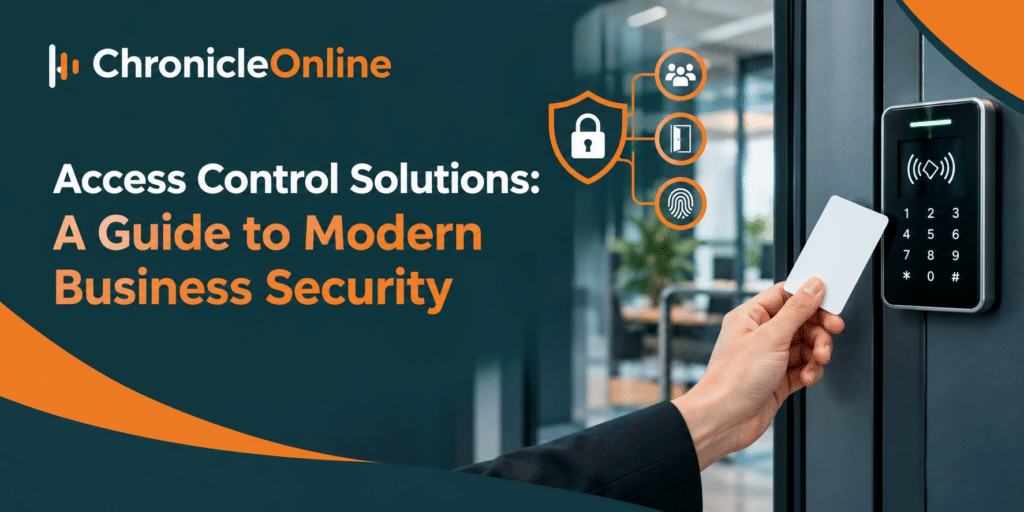
An access control solution is the combination of hardware and software that decides who can get into a building, room or site, and when. That covers physical devices – door readers, turnstiles, car park barriers – and the software layer that sets the rules, stores the records, and lets someone with the right permissions make changes remotely.
It’s a broader idea than it used to be. A lock and a set of keys is technically access control. So is a swipe card system from the 1990s. What’s changed is the expectation that the system should be cloud-hosted, connected to other business systems, and able to prove exactly who went where and when, on demand.
From Keys and Fobs to Cloud-Based Systems
Older access control set-ups usually ran on a local server sat in a cupboard somewhere on site. Changes had to be made in person, reports were pulled manually, and if that server went down, so did your ability to manage access at all. Cloud-based systems move that management online, so permissions can be updated instantly from a browser or app, and the record of who accessed what is kept safely off-site – see our guide on what to weigh up when considering access control for a fuller breakdown of the trade-offs.
The Technology Behind Modern Entry Control
Most access control solutions on the market today are built from a mix of the following:
- Proximity cards and fobs – still the most common method, quick to issue and simple for staff to use day-to-day
- Biometric readers – fingerprint or facial recognition, removing the risk of a lost or shared card altogether
- Mobile credentials – using a smartphone as the access method, useful for contractors and visitors as well as staff
- Cloud-hosted management – so permissions, reports and alerts are all accessible remotely rather than tied to one on-site server
- Integration with fire and safety systems – so doors release automatically in an alarm, while sensitive areas can stay locked down where that’s the safer option
Why UK Businesses Are Investing in Access Control Solutions
Security is the obvious driver, but it’s rarely the only one. The businesses upgrading their entry systems in 2026 tend to be dealing with a mix of these pressures:
- Sites getting bigger or more spread out – more buildings, more doors, and no realistic way to manage them all with physical keys
- Hybrid and flexible working – staff coming in on different days means access needs to flex around a changing pattern, not a fixed 9-to-5
- Fire safety and compliance – being able to produce an accurate muster point report during an evacuation, rather than a paper sign-in sheet nobody’s updated
- Reducing reception and admin overheads – visitor and contractor access that doesn’t need someone physically buzzing people in all day
- A clear audit trail – for insurance, investigations, or simply settling a dispute about who was on site and when
Whatever the trigger, the underlying goal is the same: read more on how to secure your site with access control before problems force the issue.
This is also where the technology has genuinely moved on from a few years ago. Systems like Chronicle Access Control now link straight into fire panels, offer live roll-call reporting during an evacuation, and log every door, barrier, and turnstile event in one place – rather than treating security as a separate system that nobody checks until there’s a problem.
Access Control and HR Software Management: Why They Need to Talk to Each Other
Here’s a problem most businesses only notice once it’s caused an issue: someone leaves the company, IT disables their email, but nobody tells the access control system, and their fob still opens the front door six months later.
This is exactly what a joined-up approach to hr software management is meant to solve. When your access control solution is connected to the same records used for onboarding and offboarding, a few things happen automatically:
- New starters get access from day one – without someone manually programming a card at the front desk
- Leavers lose access immediately – the moment their leaving date is processed in the HR system, not whenever someone remembers
- Role and department changes update permissions – so a promotion or transfer automatically opens (or closes) the right doors
- One shared record – rather than HR, payroll and security all keeping separate, inconsistent lists of who’s actually employed and where they can go
Businesses running HR software alongside their access control system tend to find this the single biggest reduction in administrative workload – starters and leavers stop being a manual, multi-department task and become one update that ripples through every connected system. If you’re still weighing up why online HR software is a must-have in the first place, the access control savings alone are often reason enough. Businesses already on a platform like SelectHR can also look at a direct Access SelectHR integration so holiday, absence and leaver data flow straight through without double entry.
Core Features to Look For in an Access Control Solution
Not every business needs every feature below, but it’s worth knowing what’s available before you commit to a system that can’t grow with you.
- Timed and zoned access – controlling exactly which doors someone can use, and when, rather than an all-or-nothing pass
- Hardware flexibility – support for doors, car park barriers, and half- or full-height turnstiles from one central system
- Fire panel integration – with fail-safe options that unlock doors during an alarm, and fail-secure options that keep sensitive areas locked even in an emergency
- Digital muster point reporting – an instant, accurate list of who’s safe and who’s still unaccounted for during an evacuation, instead of a clipboard
- Visitor and contractor management – temporary access that expires automatically, without needing a permanent card issued
- Manager-level mobile access – so a site manager can check who’s on-site, or lock down a door, from the Chronicle Manager App on their phone
Poor visibility into who’s actually on site is a bigger cost than most facilities teams realise – our piece on why poor workforce visibility is costing facilities teams more than they think goes into this in more detail. If visitor volume is high, it’s also worth looking at a dedicated visitor management app alongside your main access control solution, so reception staff isn’t manually signing people in and out all day.
Choosing the Right Access Control Solution for Your Business
Much of this checklist mirrors the process for how to choose HR software for small UK businesses – scalability, integration, and support all matter just as much for entry systems as they do for HR platforms.
Questions Worth Asking Before You Buy
- How many sites, doors, and users does the system support, and does that scale as we grow?
- Does it integrate with our existing HR software, management, and payroll systems?
- What happens to access control if our internet connection drops?
- Is reporting genuinely real-time, or does it rely on manually pulling data at the end of the day?
- What’s involved in adding a new site or building later on?
Matching Hardware to Your Site
The right hardware depends heavily on the environment as much as the security level required:
Standard offices generally do well with proximity card or fob readers – quick to use and cheap to issue. Sites that need a higher level of certainty over who’s actually entering, such as server rooms or secure storage, tend to move to biometric terminals or facial recognition terminals, which remove the risk of a card being lent to someone else entirely.
Common Mistakes Businesses Make with Entry Control
- Treating access control as a standalone system – leaving it disconnected from HR software management is how ex-employees end up keeping access for months
- Ignoring fire compliance until an audit forces the issue – fail-safe and fail-secure settings should be agreed with your fire safety advisor from the start, not bolted on later
- Buying hardware that can’t scale – a system that only supports one site becomes a costly rip-and-replace job the moment you open a second
- No real audit trail – if you can’t produce an accurate report of who entered where and when, you don’t really have a security system, just a set of locks
Conclusion
A good access control solution isn’t just about stopping the wrong people getting through the door. It’s about knowing, with certainty, who’s on site at any given moment, being able to prove that during a fire drill or an audit, and not leaving gaps that only show up after something’s gone wrong.
The businesses getting the most out of their systems in 2026 are the ones treating access control and hr software management as connected parts of the same picture, not separate jobs handled by separate teams. Get that link right, and the admin around starters, leavers and site security largely takes care of itself.
Frequently Asked Questions
What exactly is an access control solution?
It’s the combination of hardware, such as door readers, barriers or turnstiles, and software that decides who can enter a building or area, and when. Modern systems are usually cloud-managed, so changes can be made remotely and every entry is logged automatically.
Does access control need to integrate with HR software?
It doesn’t have to, but it makes a real difference. Linking access control to your hr software management system means access is granted and removed automatically as people join, move roles, or leave, rather than relying on someone remembering to update a separate list.
What’s the difference between access control and time and attendance?
Access control decides who can physically get into a building or area. Time and attendance records when staff are working, for payroll and reporting purposes. Many modern systems combine the two, so a swipe at the door both opens it and clocks the employee in at the same time.
Is cloud-based access control secure?
Cloud-based systems have become the industry standard precisely because they tend to be more secure than an old on-site server, not less – providers dedicate specialist teams to patching, monitoring, and penetration testing that most individual businesses simply can’t replicate in-house. That said, it’s fair to ask any provider about their hosting, data protection registration, and how often their system is independently tested.
Can access control systems work with our existing fire alarms?
Most modern systems are designed to integrate directly with fire panels. Depending on the area, doors can either release automatically during an alarm for safe evacuation (fail-safe) or remain locked to protect a sensitive space (fail-secure), with the choice agreed in line with your fire risk assessment.
How much does an access control solution cost for a small business?
Costs vary widely depending on the number of doors, the hardware chosen, and whether it’s a one-off purchase or a subscription-based cloud system. It’s worth getting a quote based on your actual site rather than a generic price list, since a five-door office and a multi-site warehouse operation are entirely different jobs.